Advertisement Feature
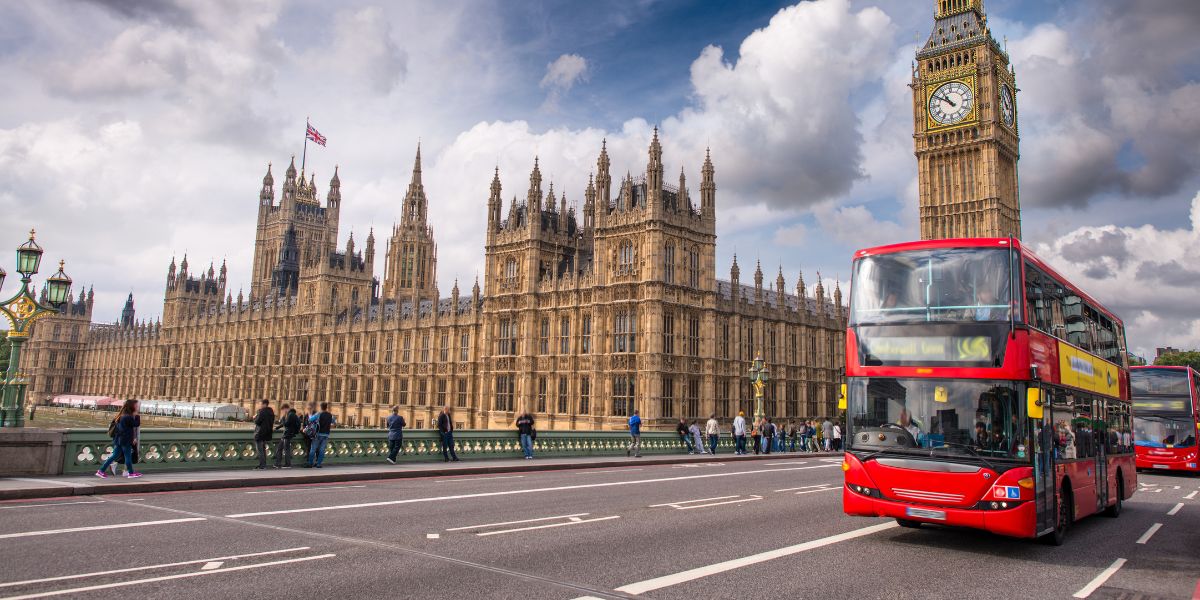
Every city has its elements that create an atmosphere. They distinguish it from other parts of our planet. What is a must-see to make a trip to London worthwhile? Big Ben, Buckingham Palace, red telephone boxes… This city has many famous details. But every visitor to London must take a ride on the red double-decker bus.
These red buses have become one of the symbols of Britain. They appear in tourist brochures and on the pages of publications devoted to this country. Today, such vehicles can be seen not only in England, because after a certain mileage, they are often sold abroad, without hurrying to dispose of them. Double-decker transportation is most relevant for London, where it is used especially actively.
London is a crowded city, and it was so several centuries ago. The problem of providing it with public transportation was quite acute, and already in 1820, the first omnibuses ran along the streets. These were prototypes of buses, designed for many seats, only instead of a motor a couple of horses were used here. At first, they just wheeled around the city, but then rails were created for them to make it easier for horses to carry large numbers of people and also to increase the capacity of the vans. By 1847, the first omnibuses appeared in two tiers, which allowed them to carry even more passengers. The innovation successfully took root, becoming the first step towards the creation of modern double-deckers.
This transport ran along certain routes, providing transportation for citizens. Initially, such transport assumed a minimum of comfort and people did not use it without extreme need, but after 1852, when another modernization took place, people liked this transport. Time passed, and instead of omnibuses on the streets, streetcars and trolleybuses began to appear. Motorized buses were also created, just in the image of omnibuses of the past. The most popular solution was the Routemaster, a red double-decker bus, which became a symbol of London. Passengers gladly accepted the novelty and began to use it, because the model turned out to be not only spacious but also extremely comfortable.
Over the years, the double-decker bus has undergone numerous changes to meet modern standards of efficiency, accessibility, and environmental sustainability. Today, many double-decker buses in the UK are hybrids or fully electric, contributing to the reduction of carbon emissions and helping the UK achieve its environmental goals. The New Routemaster, introduced in 2012, embodies this spirit of innovation, combining the classic design of the original Routemaster with contemporary technology and eco-friendly features.
Another key factor is accessibility which has also become of importance in the current double-decker buses. Present-day models include low floors, wide doors, and ramps for the accessibility of mobility-impaired persons. Thus, the upper deck has remained a significant aspect of the design as it offers passengers the ability to view the city from a good perspective. For many, the double-decker bus is not just a convenient mode of transport, but rather a beloved icon that underscores Britain’s creativity. Some of its features have stayed the same, but it has also embraced modernity and continues to change with time. The double-decker bus is a significant symbol of Britain, being a means of transport used by millions of people during their daily commutes or a thrilling way of sightseeing for foreigners.
Beyond the UK: Global Adoption and Adaptation
Although double-decker buses are best known in the UK, there are other countries that have picked up on this type of bus, adapting them depending on their circumstances.
Hong Kong
This city is certainly one of the most appropriate examples outside of the UK which has made extensive use of double-decker buses. The conditions that make the use of such buses reasonable and appropriate are the city’s hilly terrain, narrow streets, and high population density.
Berlin
In Berlin, the traditional double-decker buses are used as the main means of transportation in the hop-on hop-off tourist services in the city. They provide these services, which allow the visitors to move from one place to another like a car but at the same time a sightseeing vehicle.
Tourists use Berlin hop on hop off tracking services provided by double-decker buses. Unlike the buses used in public transport in the UK, the double-deckers in Berlin are designed to offer riders an experience that is akin to open air, and in most cases, the upper deck does not come with a roof.
Mumbai
India’s relationship with double-decker buses began during British colonialism. The city of Mumbai (formerly Bombay) introduced its first double-decker bus in 1937. These buses quickly became a favorite attraction in the city, and they are known for their ability to navigate the congested streets of Mumbai while carrying large numbers of passengers.
Amsterdam
Amsterdam, known for its progressive public transportation solutions, has also adopted the double-decker bus, especially for intercity transportation. Although the city is easily bikeable and streetcars are prevalent, the double-decker bus is more suited for long-distance travel in the Netherlands. Buses are particularly convenient on routes connecting Amsterdam to other major cities, as they can provide both large capacity and relative comfort.
To sum up, while the UK will always be the spiritual home of the double-decker bus, it is clear that this iconic vehicle has found a place in the hearts of people around the world. From the bustling streets of Hong Kong to the historic boulevards of Berlin, double-decker buses have proven to be a flexible and efficient solution for transportation. Each country has adapted the double-decker bus to its needs, integrating local design elements, technology, and cultural preferences.